
Comprehensive ACL Protection Methods: Bracing and Splinting Techniques
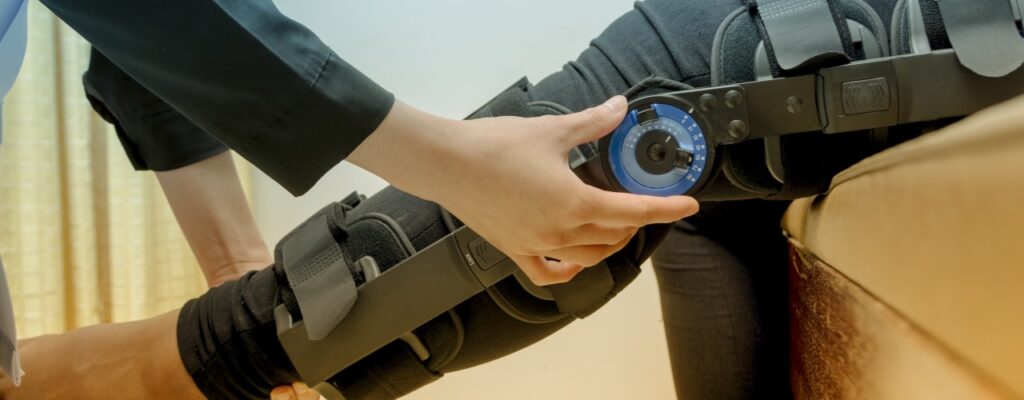
Sarah, a college soccer player, was in the middle of a game when she heard a loud pop while pivoting on the field–followed immediately by intense pain deep in the center of her knee. After a visit to her doctor, she learned she’d suffered an ACL tear that would require surgery to fully repair. That was how Sarah became familiar with the various ACL protection methods.
ACL (anterior cruciate ligament) injuries are among the most common knee injuries, particularly among athletes whose sport requires frequent cutting, pivoting, decelerating, and changing directions. Treatment will vary depending on the severity of the injury. If you merely overstretched the ligament, you can likely recover with physical therapy alone. If it’s fully torn, you will probably need to undergo surgery.
Sarah was right in the middle: her ACL was only partially torn. She opted for surgery so she could continue safely playing soccer. However, her ACL needed protection both before and after her procedure.
Sarah’s physician fitted her with a splint to immobilize her knee and prepare it for her procedure. After the surgery, she used a brace to restore strength and function.
At Sievers Sports Medicine, our Portales-based sports medicine specialists can tell you which ACL protection methods work best for you. You can also keep reading for an overview of the most effective methods available to immobilize a joint and explore their role in ACL injuries.
Understanding ACL Injuries: Signs, Symptoms, and Causes
Your knee is a complex hinge joint in which your femur (thighbone) and tibia (shinbone) connect and where your patella (kneecap), allows the thigh muscles to function properly so you can walk, run, jump, and more. The shin and thigh bones are connected by four ligaments, including the ACL, which work together to keep your knee stable.
The ACL is located in the center of the knee, which is why Sarah felt pain there when she suffered her injury. It limits your knees’ rotational movements and keeps the shinbone from moving too far forward.
Certain movements can lead to an ACL injury, which is one of the reasons it’s such a common sports injury. These movements include the following:
- Quickly changing directions while moving
- Decelerating or topping suddenly
- Landing a jump incorrectly
People can also suffer an ACL injury after a direct collision (such as a football tackle).
You can damage your ACL in one of three ways. Your symptoms and treatment will vary based on the type of damage you sustained:
- Overstretching: This is the mildest type of ACL injury. You’ll experience some pain, but with proper care, the injury should heal on its own within a few weeks.
- Partial Tear: A partial ACL tear will cause pain, swelling, and restricted mobility, although your knee will still feel mostly stable. While a partial tear can heal on its own, it can lead to a weakened ACL, so many athletes opt for ACL repair to ensure they can continue to play their sport.
- Full Rupture: The most intense type of ACL injury, a full tear will cause intense pain and swelling along with limited mobility and a sense of weakness, instability, or buckling in the knee. A full ACL tear will generally require surgery to allow for a full recovery and return to sports.
ACL Protection Methods: An Overview
When you suffer a musculoskeletal injury, you may need to immobilize the affected area to give it the time to heal. We offer two protection methods at Sievers Sports Medicine: splinting and bracing.
A splint is similar to a cast, like the kind you might get after breaking a bone. In fact, some people call them “half-casts.” But rather than encasing the entire limb with rigid material, we attach the rigid part of the splint to the affected area using bandages. There are also off-the-shelf, pre-made units that have splints built into the fabric and use velcro to secure it (i.e., knee immobilizer).
Where a splint focuses on immobilizing a body part, a brace helps more with restricting certain movements and making sure a rehabilitating limb is aligned properly. Some types of braces will let you move quite freely so you can start to safely return to your favorite activities.
For example, you may have seen sports braces on professional athletes, such as offensive linemen in football. These braces help protect the athlete while allowing for vigorous sports participation.
The Role of ACL Protection Methods in Post-Injury Rehabilitation
Braces can play a fairly significant role in ACL rehabilitation. Whether you underwent surgery and are now working through post-operative rehab or chose to treat your injury with physical therapy alone, you’ll need to slowly build up your ability to use your knee. During rehab, you’ll work on exercises to improve your range of motion and restore knee strength and stability–but the process takes time.
A knee brace gives you additional support as you work on reclaiming your knee’s functionality. You don’t wear it long-term; it’s a temporary measure that allows you to ease back into activity without risking reinjury.
Splints can also have a role in ACL injury treatment. If your injury is severe enough to require surgery, you may need to keep your knee protected immediately after the injury and while you wait for your procedure. A splint offers more flexibility than a cast and is easier to remove. Certain splints also allow limited movement, which means you can work on prehab exercises more easily.
Suffered an ACL Injury? We’re Here to Help!
No athlete wants to face an ACL injury, especially a severe one. At Sievers Sports Medicine, our sports medicine specialists understand where you’re coming from and can help rehabilitate more efficiently and with less pain. Splinting and bracing are only two of the services we offer to help you on your journey to recovery.
Want to learn more about our sports medicine services in Portales? Request an appointment today!
Sources:
https://orthoinfo.aaos.org/en/diseases–conditions/anterior-cruciate-ligament-acl-injuries/ https://www.orthobullets.com/knee-and-sports/3008/acl-tear